Choosing a scanner QR code solution today is less about buying a device and more about choosing how your business moves, tracks, sells, and scales. QR codes and barcodes may look deceptively simple, but behind every successful scan sits a decision that affects speed, accuracy, customer experience, and long-term efficiency. Get it right and operations hum. Get it wrong and every beep becomes a bottleneck. This guide walks through what truly matters when selecting the right scanner for QR codes and barcodes, without fluff, without jargon overload, and with practicality firmly in charge.
Understanding the Difference Between QR Codes and Barcodes
Before diving into hardware, it helps to understand what you are asking the scanner to read. Traditional barcodes are linear, storing limited data such as product IDs or prices. QR codes are two-dimensional, capable of holding significantly more information, from URLs and serial numbers to transaction data and authentication markers. A scanner QR code device must therefore handle both speed and complexity. Not all scanners are created equal, and not all businesses need the same level of sophistication.
Why Scanner Choice Directly Impacts Business Performance
Scanning is often the first and last touchpoint in a transaction. Slow scans create queues. Inaccurate reads create inventory errors. Poor ergonomics exhaust staff. The right scanner improves checkout speed, stock accuracy, and staff confidence, while quietly reducing operational friction. Barcode and QR scanning technology is not just a backend concern; it shapes the customer-facing rhythm of your business.
Matching Scanner Type to Your Business Environment
Retail counters, warehouses, factories, and mobile teams all place different demands on scanning equipment. For front-of-house retail, compact QR code reader devices with fast omnidirectional scanning keep queues moving. Warehouses and logistics hubs often require industrial QR code scanners designed to withstand drops, dust, and long scanning sessions. Mobile QR scanner solutions are ideal for pop-ups, events, and field operations, offering flexibility without sacrificing functionality. Context is king.
Handheld Scanners Versus Fixed Scanners
Handheld scanners remain the most versatile option, suitable for counters, shelves, and stockrooms. They are easy to deploy and replace, making them a favourite for small to mid-sized businesses. Fixed scanners, often embedded into POS systems or kiosks, excel in high-volume environments where items pass quickly over a scanning window. Choosing between them depends on transaction flow rather than budget alone.
Wired or Wireless: Freedom Versus Stability
Wired scanners offer consistent power and stable data transfer, making them reliable for fixed counters and long operating hours. Wireless scanners introduce mobility, allowing staff to scan bulky items or reach awkward shelf positions. However, they rely on battery life and connectivity. The decision hinges on whether movement improves productivity in your workflow or simply adds complexity.
Mobile QR Scanner Solutions and BYOD Strategies
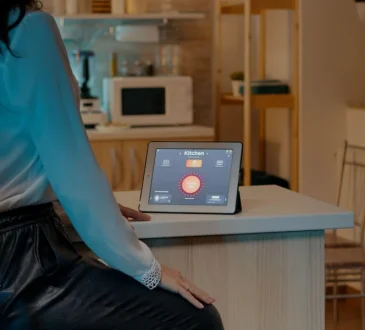
Smartphones and tablets have reshaped scanning strategies. With the right software, they become capable QR code reader devices. This approach reduces hardware costs and accelerates deployment, especially for temporary setups or distributed teams. However, mobile devices may struggle in high-volume or industrial settings where dedicated scanners offer superior speed, durability, and scan accuracy. A hybrid approach often works best.
Scan Speed and Accuracy Are Non-Negotiable
A scanner that hesitates or misreads codes slows everything downstream. High-quality scanners decode damaged, poorly printed, or low-contrast codes with ease. This is especially important for contactless QR code systems used in payments or customer-facing interactions, where delays feel amplified. Test scanners under real-world conditions, not showroom lighting.
Compatibility With Existing Systems
A scanner QR code device should integrate seamlessly with your POS, inventory software, and payment platforms. Compatibility issues lead to workarounds, and workarounds breed errors. Look for scanners that support common interfaces and data formats. Future-proofing matters too. Systems evolve, and your scanner should not become obsolete the moment you upgrade software.
Industrial QR Code Scanners for Heavy-Duty Operations
In manufacturing and logistics, scanners face heat, dust, vibration, and long shifts. Industrial QR code scanners are built for this reality. They offer reinforced casings, extended scan ranges, and higher tolerance for damaged codes. While the upfront cost is higher, downtime is far more expensive. In harsh environments, durability is not a luxury; it is insurance.
Contactless QR Code Systems and Customer Interaction
Contactless scanning has become standard across payments, check-ins, and self-service kiosks. Scanners used in these scenarios must read codes quickly from screens, not just paper labels. Glare, brightness, and screen refresh rates all affect performance. A scanner optimised for contactless QR code systems ensures smooth, hygienic, and frustration-free interactions.
Ergonomics and Staff Experience
A scanner used thousands of times a day must feel right in the hand. Weight distribution, trigger resistance, and grip design all influence staff fatigue and error rates. Ergonomic design is often overlooked until absenteeism or complaints rise. Comfortable tools lead to faster adoption and fewer mistakes.
Security and Data Integrity
Scanners handling payments, customer data, or access control must support secure data transmission. While the scanner itself may seem passive, it sits at the entry point of sensitive workflows. Ensuring encryption compatibility and firmware update support protects both business and customer trust.
Scalability for Growing Businesses
What works for one outlet may not work for ten. Choose scanning solutions that scale easily across locations. Standardised devices simplify training, maintenance, and support. Mobile QR scanner solutions can bridge gaps during expansion, while fixed infrastructure catches up. Scalability is about flexibility, not just volume.
Maintenance, Support, and Total Cost of Ownership
The cheapest scanner often costs the most over time. Consider warranty coverage, availability of spare parts, firmware updates, and local support. Downtime during peak hours can dwarf the initial purchase price. A reliable supplier matters as much as the hardware itself.
Testing Before Committing
Whenever possible, test scanners in your actual environment. Scan your actual labels. Use your actual lighting. Simulate peak hours. The right scanner for QR codes or barcodes should disappear into the workflow, not demand attention. If staff forget about the scanner and focus on customers, you have chosen well.
Choosing a scanner is about alignment. Align technology with workflow, environment with durability, and growth plans with scalability. QR codes and barcodes may be small, but the systems around them shape how efficiently your business runs every day. The right scanner does not just read codes. It reads the future of your operations and keeps pace without complaint.