
How to Select Stainless Steel Fittings for Different Industrial Applications

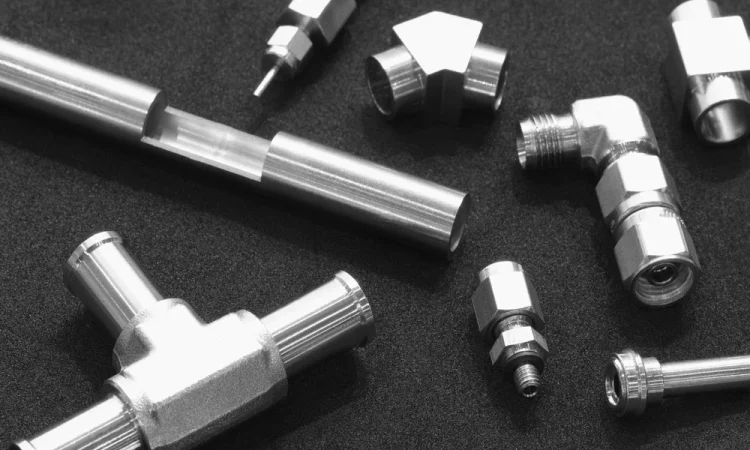

A pipeline is only as reliable as its weakest joint. You can specify the finest tube in the plant, but if an elbow pits in a salty wash line or a threaded tee starts weeping under vibration, production stops all the same. That is why experienced buyers quiz stainless steel fittings manufacturers about grade, connection type and finish long before the conversation turns to cost.
Choosing well is mostly a matter of matching the fitting to what flows through it, how hot and how hard that fluid pushes, and how the line will be cleaned and maintained. A dairy, a refinery and a pharmaceutical plant may all run stainless steel pipework, yet each would send stainless steel fittings suppliers a very different enquiry. Pin down those three things first, and most of the remaining choices fall into place.
Is 304 or 316 Stainless Steel Better for Your Fittings?
Grade 304 is an everyday workhorse. It is often called 18/8 after its rough chromium and nickel content; it resists rust in fresh water, air and most food products, and it forms and welds without fuss. For water lines, compressed air, general utilities and indoor process piping it usually does the job well, which is why practically every SS fitting manufacturer in India keeps it in most shapes and sizes.
Grade 316 adds molybdenum, and that small addition greatly improves resistance to pitting and crevice corrosion caused by chlorides. Coastal sites, seawater cooling, chemical dosing lines and anything washed with chlorinated cleaners all point towards 316. The low-carbon versions, 304L and 316L, are preferred wherever fittings will be welded, because they resist the grain-boundary attack that welding heat can trigger. Careful stainless steel fittings suppliers deliver each piece stamped with its grade and heat number, so it can be traced back to its mill certificate.
What Pressure and Temperature Ratings Should You Check?
Every fitting has a limit, and that limit depends on wall thickness, size, material, and temperature. Forged fittings for socket weld and threaded joints are grouped into pressure classes under ASME B16.11, with each class matched to a pipe schedule, so the fitting never becomes the weak link. Butt weld fittings follow the wall schedule of the pipe they join, under ASME B16.9. As temperature climbs, allowable pressure falls, so a fitting that is comfortable in a cold-water line may be marginal in hot oil or steam service. Whether you buy from an SS fittings manufacturer in India or import, confirm that the quoted ratings refer to the same standard and temperature as your piping design, and that pressure tests were carried out on the batch you receive.
Threaded, Socket Weld, Butt Weld or Compression: Which Joint Suits the Job?
Each connection style has a natural home, and knowing them makes catalogues from stainless steel fittings manufacturers in India much easier to read:
- Threaded: quick to install without welding and common in small-bore utility lines, though threads can loosen under vibration.
- Socket weld: the pipe slides into a socket and is fillet welded, giving a strong, leak-tight joint for small high-pressure lines.
- Butt weld: the fitting is bevelled and welded end to end with the pipe, giving smooth flow and the best strength in larger sizes.
- Compression: a nut and ferrule grip the tube firmly, which suits instrument lines that need regular dismantling.
Compression fittings deserve a closer look because their bodies, nuts and ferrules are precision turned components, cut on CNC lathes from solid bar. A ferrule angle that is slightly off or a thread that is cut a little rough can leave a slow leak that nobody notices until a gauge reads wrong. Socket weld joints, for their part, leave a tiny gap at the pipe end where crevice corrosion can begin; so many engineers avoid them in aggressive or hygienic service.
Why Do Food and Pharma Plants Insist on Sanitary Fittings?
Think of a milk line. Any rough patch or dead pocket where a product can sit becomes a home for bacteria, and no amount of downstream care fixes it. Sanitary fittings have smooth, polished internal surfaces, gentle bends and clamp connections that can be stripped quickly for inspection, and 316L is the grade most stainless-steel fittings suppliers recommend, because cleaning cycles use hot caustic and acid solutions.
Standards such as 3-A for dairy equipment and ASME BPE for bioprocessing describe surface finish, dimensions, and documentation for this kind of pipework. When stainless steel fittings manufacturers in India supply hygienic ranges, ask about internal finish measurements, weld quality and whether each piece is cleaned and packed to keep it free of contamination before installation.
How Much Does Machining Quality Change Fitting Performance?
A great deal. Threads, sealing faces and bores have to line up closely, because a fitting that is slightly off center puts uneven load on the joint and leaks sooner. Hex bodies, unions, nipples, adaptors and plugs are all precision turned components, and the quality of the turning shows how cleanly they assemble and how long they stay tight.
Good practice includes thread gauges at regular intervals, dimensional checks on the first and last piece of each run, and smooth surface finishes on sealing areas. An SS fittings manufacturer in India that turns parts in-house can usually show inspection reports for each batch, which gives you a clear basis for comparing samples.
Price comparisons are only meaningful once those basics match. Cost depends on grade, size, whether a part is forged or machined from bar, surface finish, testing and certification, and order quantity. Asking stainless steel fittings suppliers to quote against identical specifications keeps the comparison fair.
What Documents Should Accompany Stainless Steel Fittings?
At the very least, each consignment should come with mill test certificates showing chemical composition and mechanical properties, plus clear grade and heat markings on every piece. Dimensional reports, pressure test records and, for hygienic lines, surface finish data add further confidence. Reputable stainless steel fittings manufacturers keep these records linked to each batch, so any fitting can be traced back to its raw material years later. Filing them alongside your piping drawings makes inspections, audits and future replacements far simpler.