Most business owners have never actually watched their own lot get cleared. The invoice shows up. The parking spaces are clean the next morning. That’s about the extent of it.
Ask what snow removal anchorage crews actually do between the storm hitting and the lot being clear, and most people are just guessing.
Worth knowing anyway. It’s really the only way to tell a crew doing the job properly from one just showing up and leaving early.
Before the Crew Even Arrives
A visit doesn’t start when the truck pulls in. It starts hours earlier, sometimes the night before.
Someone’s watching the forecast, deciding when a storm has actually finished enough to make plowing worth the trip. Go too early and you’re clearing half a storm, paying for the same job twice. Wait too long and ice sets into the pavement before anyone’s touched it.
That timing judgment tends to matter more than any piece of equipment. It’s usually what separates a decent provider from a mediocre one.
What Actually Happens On Site
It starts with a quick assessment. Snow depth, ice buildup, which areas need attention first. Fire lanes and main entrances tend to go before the back corners of a lot ever get touched.
From there, the drive lanes and open lot get plowed. This clears the bulk of the volume fast, pushed to designated storage areas rather than piled wherever’s convenient.
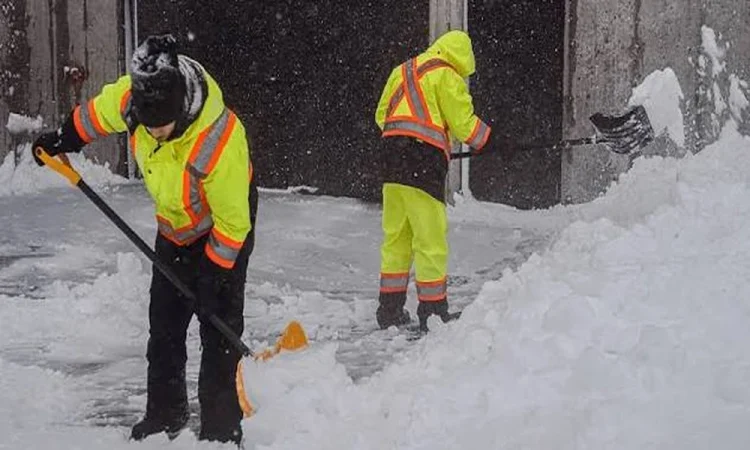
Anywhere a plow physically can’t reach gets cleared by hand instead. Doorways, narrow walkways, tight spots near dumpsters or loading docks.
Sidewalks and pathways usually get their own pass, often separate from the vehicle areas entirely. Pedestrian zones carry the highest liability risk if they get missed. De-icing goes down next, applied to walkways and high-traffic spots prone to refreezing, particularly once temperatures drop again after dark.
Before the crew leaves, there’s a final walkthrough. Entrances, ramps, accessibility routes, checked one more time before anyone calls it done.
None of this runs in a fixed order every visit. A property with heavy foot traffic might get its sidewalks cleared before the main lot’s even finished, simply because that’s where the liability actually sits.
Why Some Visits Take Longer Than Others
Ten minutes at one property. An hour somewhere else. Rarely about total snowfall.
Property layout tends to matter more than owners assume. Tight parking, awkward loading dock angles, multiple building entrances. All of it adds time that a flat “inches of snow” number was never going to predict.
Ice adds its own delay on top of that. One heavy snow event calls for a straightforward plow. Repeated freeze-thaw cycles call for de-icing applied and reapplied, sometimes more than once in a single week.
What a Property Owner Should Actually See Afterward
Drive lanes and parking spaces cleared down to pavement, not just pushed into thinner piles. That’s the baseline, not a bonus.
Walkways should be walkable without ice underfoot. Snow should be piled somewhere that doesn’t block sightlines or drainage. Any de-icing treatment should be visible as a light coating on ramps and stairs, not assumed.
Ice patches still sitting near an entrance after a visit isn’t a minor miss. That’s exactly where a slip-and-fall claim starts.
How Providers Like Alaska Landworks Structure a Visit
Companies running established commercial routes, alaskalandworks.com among them, tend to build a visit around property type instead of treating every site the same.
A retail center with customer foot traffic gets prioritized one way. An industrial lot with forklifts and trucks moving through gets prioritized another. A healthcare facility with elderly visitors gets held to a different walkway standard entirely.
That structure is usually what separates a routine service visit from one that actually does something about liability.
Frequently Asked Questions
How long does a typical visit take?
Depends heavily on property size and layout. Twenty minutes covers a small lot. A large complex with multiple buildings can run a few hours.
Is de-icing part of every visit, or billed separately?
Often separate, and worth confirming directly in the contract. Some providers bundle it into the base visit, others treat it as an add-on triggered by specific weather conditions.
What happens if it keeps snowing through the day?
Providers with ongoing coverage typically send follow-up passes rather than treating one visit as the end of it, especially during a multi-day storm.
Who decides when the crew actually shows up?
Usually the provider, not the business, working off real-time weather monitoring. Most contracts specify a response time after snowfall stops rather than a fixed daily schedule.
A clean lot the next morning looks simple enough. What actually got a business there rarely is.
Map Link: