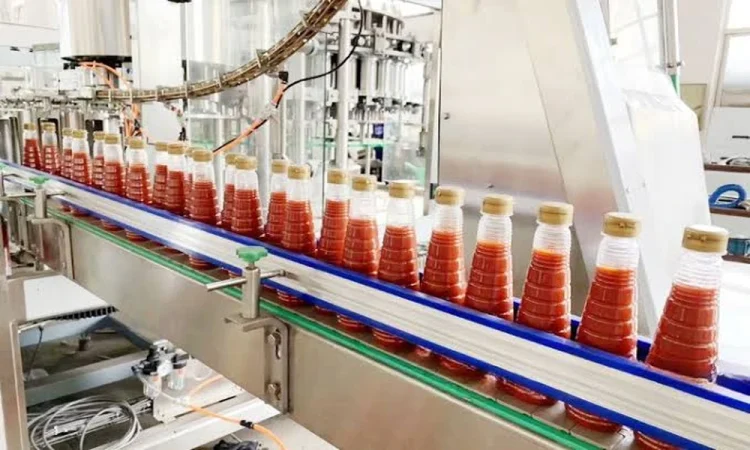
Filling equipment is bought once and lived with for a decade, usually by people who will specify it two or three times in a career. That combination, high consequence and low frequency, is why so many decisions are made on throughput figures and price rather than on the handful of factors that actually determine whether the machine performs. Approaching liquid filling equipment singapore manufacturers rely on is best done as a structured evaluation rather than a comparison of quotations.
Start With a Product Specification, Not a Machine Specification
The information a supplier genuinely needs is about your product, viscosity at working temperature and how it changes, whether it foams, whether it contains particulates or fibres, whether it settles or separates on standing, its temperature at filling, and its chemical characteristics as set out in the safety data sheet. Every subsequent decision follows from these. Buyers who lead with a required speed and a budget receive proposals that are revised after delivery.
The Container Is the Second Input
Provide drawings or samples of every container the line will handle, including the range of sizes and the closure type. Container geometry determines nozzle design, neck opening constrains fill rate, wall stiffness affects how containers can be held and conveyed, and the closure dictates what the capping station must do. A machine specified around one container and later asked to run a different format is where most disappointment originates.
Filling Technology Matched to Both
Gravity and flow-meter filling suit thin, free-flowing products. Piston and positive displacement systems handle viscous products, pastes and some particulates. Weigh filling on load cells suits anything sold by mass or with variable density, and produces a per-container record supporting traceability. Diving nozzles handle foaming products by filling beneath the rising surface. There is no universally superior method; there is one that fits your product and container, and it is usually obvious once both are described properly.
Accuracy and What Giveaway Costs
Manual and poorly specified filling produces systematic overfill, because operators fill generously to avoid underweight complaints. One or two percent across a year of production is a substantial quantity of product delivered without being invoiced, and it appears in no report. Ask suppliers to state achievable tolerance with your specific product rather than a headline figure obtained with water, since viscosity and foaming both degrade real accuracy considerably.
Materials, Seals and Compatibility
Wetted components must tolerate the product for years, and seals and gaskets are usually the limiting element rather than the stainless steel. Solvents, strong acids and alkalis, and chloride-bearing products all narrow the options. Provide the safety data sheet and ask for a wetted-parts list with materials named, then check compatibility rather than accepting an assurance. A seal that swells or degrades six months in produces contamination and downtime that dwarf the cost of specifying correctly.
Handling Is Part of the System
The filler is one station. Containers must be denested, conveyed, positioned and held, then capped, sealed, labelled, coded and palletised. Accumulation conveyors between stations absorb small stoppages so one machine pausing does not halt the line. Buyers who automate filling and leave everything else manual frequently find output barely changes, because the constraint was never at the filling head. Providers of industrial filling and packaging systems should be quoting the sequence, not the station.
Changeover, Cleaning and Real Capacity
Nominal speed multiplied by hours is not output. Real capacity is what remains after changeovers, cleaning, product losses at each change, and stoppages. Ask how the wetted path is drained and flushed, whether cleaning in place is possible, whether disassembly is tool-free, how much product is lost per change, and whether container size changes are recipe-driven. For plants running many SKUs in short batches, these figures determine weekly output far more than filling speed.
Compliance and the Working Environment
Where flammable products are handled, area classification governs what equipment is permissible and makes bonding and earthing essential rather than advisory. Guarding, interlocks, emergency stops and safe access for cleaning are baseline requirements under workplace safety obligations that sit with the occupier. For food and pharmaceutical applications, surface finish, drainability and cleanability requirements apply instead. Establish which regime governs before evaluating machines, not after.
Ask to See One Running
Specifications are written by people who want to sell you something; a machine on a factory floor is not. Ask any shortlisted supplier to arrange a visit to an installation running a comparable product, ideally one that has been in service for a couple of years rather than a recent commissioning. Watch a changeover if you can, ask the operators rather than the managers what irritates them about it, and ask the maintenance staff what fails and how easily parts arrive. Half a day spent this way tells you more than any amount of comparison between quotations, and suppliers confident in their installed base offer these visits readily.
Support Is the Long-Term Variable
Over a decade, local support matters more than any specification line. Ask where spare parts are stocked, what breakdown response time applies, whether technicians are locally based, what a service contract covers, what training is provided and to how many staff, and how long the line is expected to take to reach rated output after commissioning. Evaluated on product fit, handling, changeover, compliance and support, liquid filling equipment singapore plants install performs as promised rather than as advertised.